
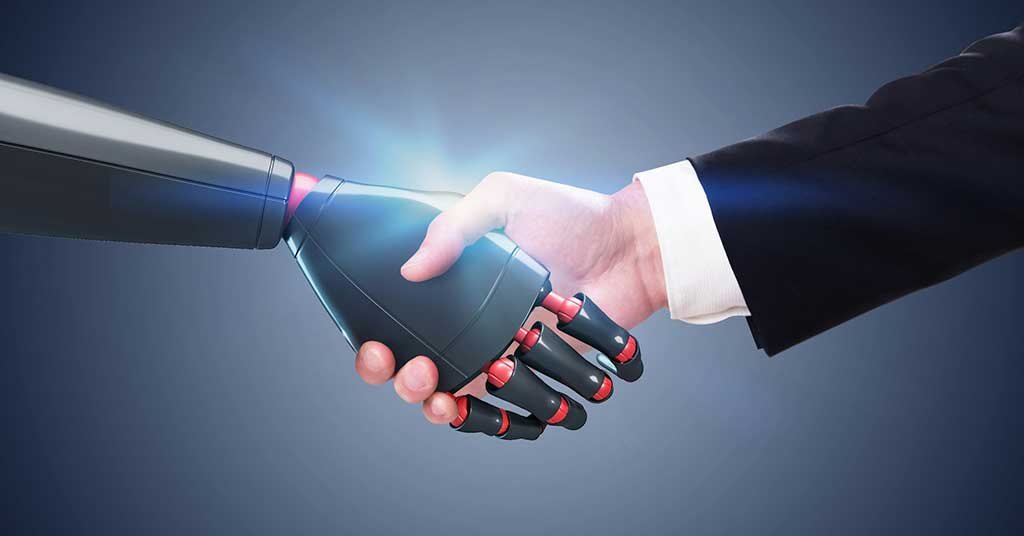
Don’t let AI dilute your professional value. Human judgment is the only reliable signal in a world flooded with noise
Naturally judgmental as we are, we’ve become obsessed with sniffing out the hand of AI in every article, social media post and email we receive. Digital town squares have spiralled into a self-righteous, finger-pointing symphony of “AI wrote this!” accusations, as if identifying the tool somehow settles the question of value.
I say: So, what?
Whether AI helped create something is rapidly becoming the wrong question. The more important question is what happens when AI becomes so common that nobody notices it anymore.
That future is arriving faster than many people realize. As artificial intelligence makes content cheaper, faster and easier to produce, the value of human work is shifting. The skills that will matter most won’t be typing, drafting or generating information. They will be judgment, creativity and the ability to recognize what is worth paying attention to.
That’s the change most people aren’t talking about.
History suggests that society eventually stops caring about the tools behind creative work and starts caring about results. We don’t judge an architect by whether they used a pencil or CAD software; we judge the building. We don’t judge a war correspondent’s photo by whether it was captured on film or a digital sensor; we judge the truth it reveals. The debate over AI will likely follow the same path.
The more important question is what happens when that transition occurs.
As AI makes content easier to produce, human judgment becomes increasingly scarce and therefore increasingly valuable.
Consider the transition from candlelight to the lightbulb. Initially, electric light was harsh, flickering and unreliable. People preferred the familiar warmth of a candle. Yet the technology improved, spread and eventually became so superior that candles were relegated to emergencies and romantic dinners. AI content is the flickering bulb. The technology behind it, large language models (LLMs), is becoming more capable and reliable every day.
We’ve seen this pattern before. Society rarely rejects technologies because they are imperfect. It rejects them because they are unfamiliar. Once they become useful enough, convenience wins.
That reality matters because AI isn’t simply changing how we work. It’s changing what society rewards.
For generations, we paid people to turn knowledge into words. Journalists wrote articles. Marketers wrote copy. Consultants wrote reports. Teachers built lesson plans. Lawyers drafted documents. Much of that work involved translating expertise into something another human could understand.
Now a machine can do much of that before you’ve finished your morning coffee.
Perhaps the bigger question isn’t whether AI can produce information. It’s whether producing information will remain valuable once everyone has access to machines that can do it instantly.
Unsurprisingly, many people find that prospect unsettling.
The immediate reaction has been panic. We hear warnings that writers, teachers, analysts and other professionals will become obsolete. Yet history suggests a different outcome. The printing press did not eliminate authors. Spreadsheets did not eliminate accountants. Search engines did not eliminate researchers.
Increasingly, the skills employers find worth paying for don’t belong to those who can simply prompt AI, but to those who can transform its output into work that feels authentically human.
If AI can produce unlimited content, the real scarcity may no longer be content itself. It may be the people capable of deciding what’s worth publishing, reading and believing.
In journalism, the competitive advantage won’t be typing faster than a machine. It will be identifying stories worth pursuing, recognizing what matters and exercising judgment about what is true. AI can summarize information. It cannot attend a city council meeting, cultivate a source or understand the subtle motivations driving a political controversy.
In education, the challenge is even more profound. Students now possess tools capable of generating essays, solving problems and explaining concepts instantly. Educators can respond by trying to ban the technology, but that approach resembles banning calculators from mathematics classrooms. The more productive question is what students should learn when information generation becomes nearly free.
If information generation becomes nearly free, memorization becomes a less valuable skill. The question then becomes what students should be learning instead.
My answer is critical thinking.
In a world flooded with machine-generated content, the ability to evaluate evidence, challenge assumptions, recognize bias and construct original arguments becomes more valuable, not less. If AI can produce an essay in 30 seconds, the scarce skill is no longer writing words. It is knowing whether those words are correct.
Human creativity will also change.
Many artists, musicians and writers fear that AI will dilute creativity by making production effortless. Yet creativity has never been defined by effort alone. The value of art lies not in the difficulty of its creation but in its ability to communicate something meaningful.
The camera did not destroy painting. Synthesizers did not destroy music. Digital editing did not destroy filmmaking.
The tools changed. The standards evolved. Creativity survived. The greater risk is not that machines become creative. The greater risk is that humans stop demanding originality from themselves.
This is where the debate over AI often goes wrong. We focus on whether content was created by a machine when we should be focusing on whether the content has value.
A bad post is a bad post, whether a human spent two hours on it or a machine created it in seconds. The uncomfortable truth is that we’ve been producing human slop in the form of clickbait, rage-bait and SEO drivel for nearly two decades. AI didn’t invent the problem. It’s simply making the process faster.
The real divide isn’t between human and machine. It’s between information that matters and information that doesn’t.
AI is becoming less visible and more integrated into daily life. Professional emails are routinely drafted, rewritten or refined by AI assistants. Search engines increasingly generate answers rather than links. Recommendation algorithms influence what we read, watch and buy.
The technology is quietly moving from tool to infrastructure. As that happens, we’ll stop playing detective and start asking a simpler question: Is this useful?
Readers won’t care whether an article involved AI. Employers won’t care whether a report was drafted with assistance. Consumers won’t care whether a recommendation came from a human or a machine. They’ll care whether it was useful.
If AI continues down its current path, the implications are difficult to ignore.
Work may increasingly reward judgment over production. Education may place greater emphasis on critical thinking than memorization. Creativity may become less about effort and more about originality.
And that may be the most significant shift of all.
The future isn’t a contest between humans and artificial intelligence. It’s a contest between people who can still exercise judgment and those who outsource it.
AI will flood the world with content. The question is what becomes valuable once content is no longer scarce.
I suspect that it won’t be information at all. It’ll be judgment.
The people who thrive won’t be those who reject AI, nor those who surrender to it. The people who thrive will be those who use it while preserving the qualities machines still struggle to imitate: judgment, wisdom, curiosity and imagination.
We’ve spent years arguing about whether AI can create. The more important question may be whether we’ll continue thinking for ourselves once it can.
That’s the future most people aren’t talking about.
Nick Kossovan is a syndicated columnist and career expert with over 20 years of experience in the corporate hiring landscape. He specializes in providing pragmatic, unsweetened advice on career navigation, workplace dynamics, and professional growth.
Explore more on Artificial Intelligence
The views, opinions, and positions expressed by our columnists and contributors are solely their own and do not necessarily reflect those of our publication.
Troy Media empowers Canadian community news outlets by providing independent, insightful analysis and commentary. Our mission is to support local media in helping Canadians stay informed and engaged by delivering reliable content that strengthens community connections and deepens understanding across the country.

